

Most survivors don’t stay silent because they don’t want help.
They stay silent because experience has taught them what happens when they speak.
At first glance, Liliana looked like another “troubled kid.” She had been in and out of the juvenile system for years—skipping school, arguing with her mom, and now sitting in juvenile detention after being caught carrying drugs. To most people, her story stopped there.
What no one saw was what was happening outside those walls.
Liliana was being trafficked by her uncle—pressured and coerced into exploitation to bring money into the household. When she tried to tell her mother, she wasn’t believed. Instead, she was blamed and kicked out of the house. That moment taught Liliana a painful lesson many survivors learn early: it’s safer to stay quiet.
So she stopped trying.
Liliana’s silence is not unusual. Across the U.S., sexual violence and trafficking remain dramatically underreported. Only between 5%-6% of sexual assaults and trafficking cases are ever reported to law enforcement. And when survivors do report, a significant number of cases are dismissed as “unfounded”—often because the survivor doesn’t fit what people expect a victim to look like or how they believe a victim should behave.
Disbelief is rarely loud. It shows up quietly—in assumptions, skepticism, and missed warning signs.
Survivors are often not believed because:
- Trafficking rarely looks like kidnapping. Survivors are often manipulated by someone they know and trust, making exploitation appear consensual from the outside.
- Survivors are frequently criminalized for acts they were forced into—carrying drugs, stealing, or engaging in commercial sex—obscuring the reality that trafficking always involves multiple crimes, coercion, and control.
- People don’t recognize boys and men as victims, despite growing evidence that they are frequently exploited.
- Difficulty for law enforcement to identify
Liliana lived at the intersection of several of these realities.
Yet, everything changed the day a woman came into the juvenile detention center to talk with the girls about exploitation and trafficking. As she spoke, Liliana felt her chest tighten. The scenarios sounded uncomfortably familiar. for the first time, Liliana wondered if what she was experiencing wasn’t her fault—and if someone might actually understand.
With hesitation and hope, she shared her story.
The woman was a survivor advocate with Unbound Now.
Instead of interrogating Liliana or asking her to prove what she had endured, the advocate listened. She asked gentle, informed questions and completed a trafficking assessment using the Commercial Sexual Exploitation–Identification Tool (CSE-IT). Liliana scored a Clear Concern, meaning she was highly likely to be a victim of human trafficking. For the first time, someone didn’t dismiss her story.
They believed her.
That moment—being believed—changed everything.
Liliana was immediately connected to Unbound Now’s Care Coordination team, which began bringing together the systems that had previously failed her. Medical providers, mental health professionals, placement staff, law enforcement, and survivor advocates gathered around her—all focused not on what Liliana had done wrong, but on what had been done to her.
In one meeting, Liliana looked around the room and quietly took it all in.
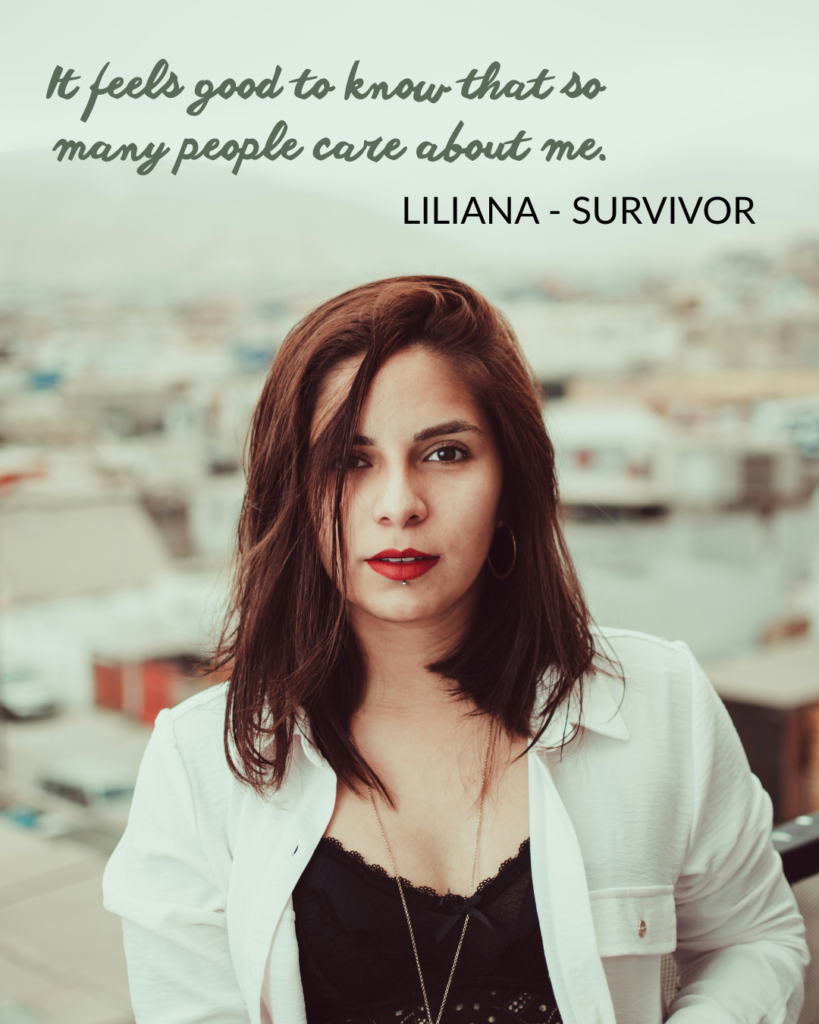
“It feels good to know that so many people care about me.“
For the first time, adults weren’t dismissing her story. They weren’t minimizing her pain. They were protecting her, advocating for her, and working together to hold her trafficker accountable.
Today, Liliana lives safely with her grandparents. She’s back in school. Healing is ongoing, and some wounds will take time—but she has stability, advocacy, and hope she didn’t have before.
At Unbound Now, belief is not just a feeling—it’s a practice.
Survivor advocates listen without interrogation or pressure. Survivors are never required to prove their experience. We understand that disclosure often comes in pieces, and that belief reduces retraumatization, builds trust, and makes long-term advocacy possible.
And belief extends beyond individual survivors. Unbound Now trains law enforcement, healthcare professionals, educators, and community members to recognize trafficking as it truly appears—not just how it’s portrayed in headlines. These trainings help professionals identify victims who are often overlooked, prevent cases from being dismissed, and increase the likelihood that survivors are connected to care instead of punishment.
Trafficking thrives where disbelief goes unchallenged.
Healing begins when someone finally says, “I believe you.“
And for survivors like Liliana, that belief changes everything.